Make Borders Less Surprising
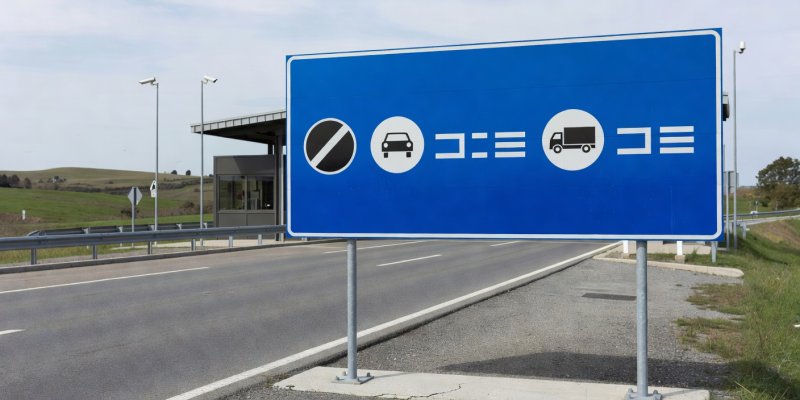
The Schengen Agreement has largely removed the physical barrier of passport control across much of Europe, allowing you to drift from France into Germany or Italy into Austria without stopping your engine. However, the legal boundaries remain firmly in place. National driving regulations, toll systems, and vehicle requirements shift invisibly at the border line. An unobservant driver can quickly accumulate fines for simply lacking the correct sticker.
Tolls vs. Vignettes
Paying for road infrastructure in Europe generally falls into two distinct systems: the physical toll booth and the pre-paid vignette. Understanding which country uses which system is the foundation of border preparation.
| Country | System Type | Key Details |
|---|---|---|
| France, Italy, Spain | Distance-based Tolls (Péage/Pedaggio) | Take a ticket on entry, pay on exit. Credit cards widely accepted. Electronic tags (e.g., Telepass, Bip&Go) save queuing. |
| Switzerland | Annual Vignette | A physical or digital sticker valid for a calendar year (no short-term option). Mandatory for motorways. |
| Austria, Slovenia | Time-based Vignette | Available in 1-day (Austria), 10-day, 2-month, or annual durations. Highly enforced by cameras. |
| Germany | Free Motorways | Autobahns are free for passenger cars, though speed limits and etiquette are strictly observed. |
Never cross a border into a vignette country assuming you can buy one at the first petrol station inside the country. Enforcement cameras are often positioned precisely at the border. Always purchase digital vignettes online before your travel dates, or stop at border-adjacent fuel stations in the departing country.
Environmental Zones (LEZs)
Perhaps the most complex modern driving hurdle in Europe is the proliferation of Low-Emission Zones (LEZs). Major cities, and increasingly entire regions, restrict older or more polluting vehicles from entry. Ignorance of these zones is not accepted as a defense, and fines arrive reliably by mail weeks after your return.
In France, the Crit'Air sticker is mandatory for driving in cities like Paris, Lyon, and Strasbourg. You must order it by mail weeks in advance. Germany utilizes the Umweltplakette, a green sticker required for entering most urban centers. Italy operates Zona a Traffico Limitato (ZTL) areas, which are even stricter: these are historic city centers where only registered local residents may drive. Driving past a ZTL sign in Florence or Rome guarantees an automatic camera fine.
Mandatory Vehicle Equipment
Finally, inspect your boot before you pack your bags. European law dictates mandatory safety equipment, and the list varies by nation. While a warning triangle and a high-visibility vest (kept in the cabin, not the boot) are almost universally required, other quirks exist.
For example, driving in winter often requires winter tires (marked with the Alpine symbol) or snow chains to be carried in the vehicle, particularly in Austria, Germany, and mountainous regions of France and Italy. Some nations require a first-aid kit compliant with DIN standards. Taking an hour to ensure your vehicle is compliant makes crossing borders a stress-free transition rather than an anxious gamble.