Draw a Kinder Route
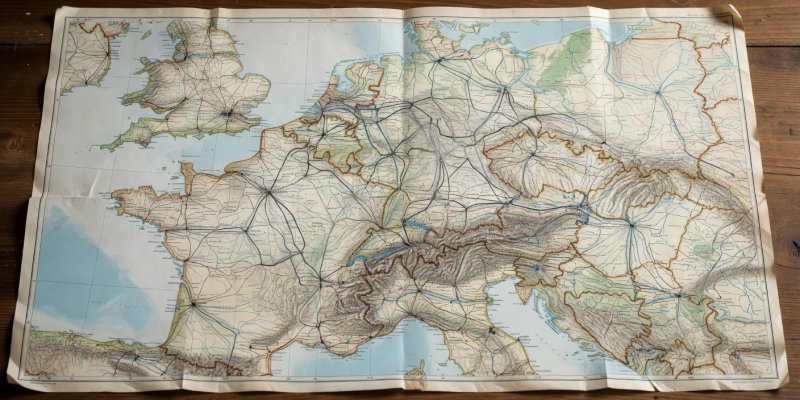
The modern sat-nav operates on a simple, brutal logic: find the fastest line between two points and instruct the driver to hold their nerve on a multi-lane motorway until the destination is reached. For independent drivers who value observation over pure velocity, this logic ruins the very premise of a road trip. To make the miles part of the holiday, you must take back control of your itinerary and draw a kinder route.
Balancing Velocity with Observation
European motorways—from the sprawling German Autobahn network to the relentless French Autoroutes (péage)—are undeniable marvels of engineering. They compress time and flatten geography. When you need to put 500 kilometers behind you before lunch, they are indispensable. However, relying entirely on them turns a journey through diverse cultures into a sterile tunnel of tarmac and generic service stations.
The art of route planning lies in blending utility with curiosity. We suggest adopting the "Two-Thirds, One-Third" rule. Spend two-thirds of your day utilizing efficient primary routes to cover the necessary ground. Then, deliberately divert off the motorway for the remaining third, using secondary national routes—such as the French Routes Nationales or the Italian Strade Statali—to approach your evening stop. This shift drops your speed, demands more engagement with the steering wheel, and introduces you to the landscape intimately.
Estimating Realistic Travel Times
Digital maps are wildly optimistic about average speeds on secondary roads. While a navigation algorithm might calculate a journey across the French Dordogne or the hills of Tuscany based on the maximum legal limit of 80 or 90 km/h, the reality is starkly different. Agricultural vehicles, narrow village bottlenecks, and the inevitable desire to pull over and look at the view will shatter these digital predictions.
| Road Type | Digital Estimate Avg Speed | Realistic Planning Avg Speed |
|---|---|---|
| Motorway / Autoroute | 110-120 km/h | 100 km/h (factoring fuel stops) |
| Primary National Route | 80-90 km/h | 60-70 km/h |
| Secondary / Scenic Route | 60-70 km/h | 40-50 km/h |
| High Alpine Pass | 40-50 km/h | 25-35 km/h |
When drawing your route, apply these realistic averages. A 200-kilometer drive on rural roads might technically take two and a half hours mathematically, but realistically it will consume an entire morning. Planning with these margins prevents the stressful rush that ruins a driving holiday.
Pacing Your Days
Human stamina is finite, and driving fatigue is a silent thief of enjoyment. Attempting back-to-back 600-kilometer days is a recipe for exhaustion and resentment toward your passengers. A thoughtful fieldbook itinerary aims for varied daily distances. If Day One is a heavy motorway transit of 500 kilometers, Day Two should be a gentle 150-kilometer meander through a specific region.
Furthermore, commit to the "Three-Hour Rule." Never allow three hours to pass without the engine being switched off and the driver stepping out of the vehicle. These forced pauses—whether at a historic roadside marker, a local village square, or just a quiet layby beneath a cluster of pines—reset concentration and reconnect you with your physical surroundings.
Ultimately, a kinder route is one where the arrival time is a loose suggestion, and the journey itself feels like time well spent.