Pause Beyond the Obvious
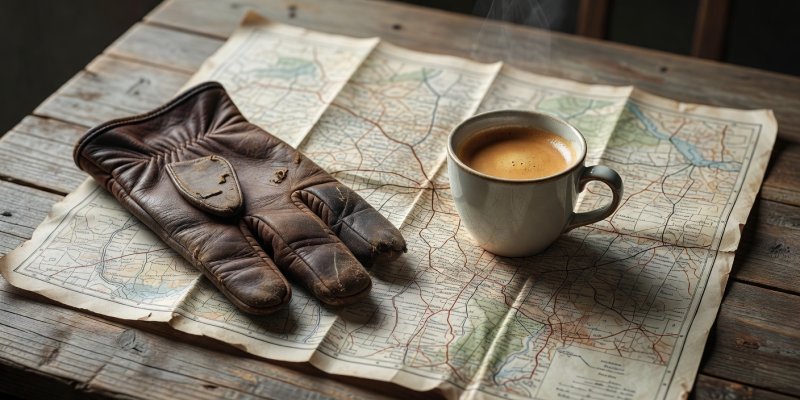
The standard European motorway service station—whether it is an Autogrill suspended over an Italian autostrada or a sprawling Raststätte in Germany—serves an undeniable biological and mechanical purpose. It dispenses fuel, caffeine, and sanitation with ruthless efficiency. But it provides absolutely no sense of place. To truly make the miles part of the holiday, you must learn to pause beyond the obvious.
The Five-Kilometer Rule
When the fatigue sets in and the fuel needle drops, the temptation to take the nearest motorway exit into a sterile petrol forecourt is high. We advocate for the "Five-Kilometer Rule." Instead of stopping at the motorway services, check your map for a town or village situated within five kilometers of your current exit. Taking ten extra minutes to navigate into a local settlement entirely changes the quality of your break.
In France, a quick diversion into a rural village usually reveals a boulangerie where a fresh baguette and local cheese cost less than a plastic-wrapped sandwich on the autoroute. In Spain, pulling off the Autovía into a dusty regional town will often yield a small bar serving excellent café con leche and a slice of tortilla among locals, rather than stressed tourists.
Historic Markers and Viewing Points
Europe’s roads are littered with quiet history. Often overlooked by drivers intent on a distant destination, small brown tourist signs point toward ruined castles, ancient Roman bridges, and obscure battlefields. These sites make excellent, uncrowded stretching stops.
Reading the Brown Signs
Across most of Europe, brown road signs indicate tourist attractions, geographic features, or historical monuments. If you see a brown sign pointing down a promising lane and you have twenty minutes to spare, follow it. You might find an empty viewpoint overlooking a sweeping valley, completely devoid of the crowds massing at the major guide-book highlights.
The Art of the Picnic
One of the finest traditions of European road travel is the roadside picnic. In countries like France and Switzerland, the infrastructure supports this beautifully. Many secondary roads feature Aires de repos (rest areas) equipped with solid wooden tables beneath shaded trees.
Preparation is key. Assemble a "field kitchen" box in your boot: a sharp knife, a wooden board, real metal cutlery, a corkscrew, and linen napkins. Sourcing your provisions from local markets earlier in the morning—cured meats in Italy, hard cheeses in the Swiss Alps, fresh fruits in Andalusia—turns a midday stop into a regional tasting menu. Eating a carefully procured local lunch while sitting on the bonnet of your car, overlooking a silent valley, is infinitely superior to queuing under strip lighting at a crowded service plaza.
By pausing thoughtfully, you break the hypnotic, exhausting rhythm of continuous driving. The detours stop being interruptions and become the very substance of the road trip.